

Accounts Receivable Outsourcing Services: The Benefits, Risks, & Considerations
Key Takeaways
- Accounts receivable outsourcing services cover invoicing, payment follow-up, collections, cash application, reconciliation, and reporting.
- Outsourcing moves defined receivables to an external team, while internal leaders retain financial authority.
- Outsourcing gives finance teams more capacity and consistent control over receivables activity.
- Keeping AR in-house works when the workload, team capacity, customer involvement, and controls remain manageable.
- The right model depends on receivables volume, finance capacity, reporting needs, and internal ownership.
56% of small businesses are waiting on money tied up in unpaid invoices, and nearly half of those invoices are more than 30 days overdue, according to a survey.
Even when invoices go out on time, slow payments, rising customer balances, and inconsistent follow-ups can place added pressure on your finance team. As receivables volume grows, tracking every invoice, payment, and overdue account becomes increasingly difficult.
This kind of workload is exactly what outsourcing AR is built to handle, assigning specific responsibilities to an external accounting team. These may include invoice processing, payment tracking, collections, cash application, reconciliation, and reporting. Your business retains control over financial decisions while the external team handles day-to-day operations.
Some businesses continue to manage AR internally, while others outsource when receivables begin to consume too much of the finance team’s time or when existing processes can no longer support consistent reporting and follow-up on collections.
This guide explains what it actually involves, how the process works, the potential benefits and risks, and how to decide whether outsourcing AR or keeping it in-house is the right approach for your business.
What Do Accounts Receivable Outsourcing Services Cover?
AR outsourcing covers the day-to-day work of billing customers, tracking payments, managing collections, and maintaining accurate accounts receivable records.
Services include:
Invoice Processing: Preparing, reviewing, and recording customer invoices.
Payment Tracking & Follow-Up: Monitoring due dates, outstanding balances, and customer payments, then following up on overdue invoices.
Collections & Dispute Management: Following up on past-due accounts, tracking disputes, and escalating unresolved issues.
Cash Application: Matching customer payments to the correct invoices and updating account balances.
Reconciliation & Aging Reports: Reconciling receivable records, reviewing aging balances, and identifying discrepancies or collection priorities.
Customer Account Records: Maintaining payment histories, invoice records, balances, and related customer information.
The exact scope varies by provider. Some teams focus on invoicing, payment follow-up, and collections, while others also support cash application, reconciliation, reporting, and related accounting work.
How Is an Outsourced Accounts Receivable Process Managed?
Once responsibilities are assigned, the external team handles the routine AR work, while your internal team handles decisions that require judgment.
Invoice Processing: The external team processes invoices in accordance with the company’s billing terms and records them in the accounting system.
Payment Monitoring: The team tracks open invoices, due dates, and outstanding balances to identify accounts that need follow-up.
Collections & Follow-Up: The team contacts customers regarding overdue invoices and escalates disputed or unresolved accounts in accordance with established procedures.
Cash Application & Reconciliation: The team matches customer payments to invoices, posts them to the accounting records, and reconciles them. The team flags unapplied cash and discrepancies for review.
Reporting & Escalation: The team provides updates on aging, collections, payment status, and unresolved accounts. Finance leaders review these reports and handle issues that require financial judgment.
1116 Perspective | Our View
Outsourcing AR should reduce operational workload without diluting financial control, and it shouldn’t operate in isolation, either. AR feeds directly into cash reporting, reconciliations, and the month-end close, so it works best as part of a connected accounting process, not as a standalone task. Keep the decisions that affect credit, cash, and financial reporting with your finance leadership.
In-House vs. Outsourced Accounts Receivable
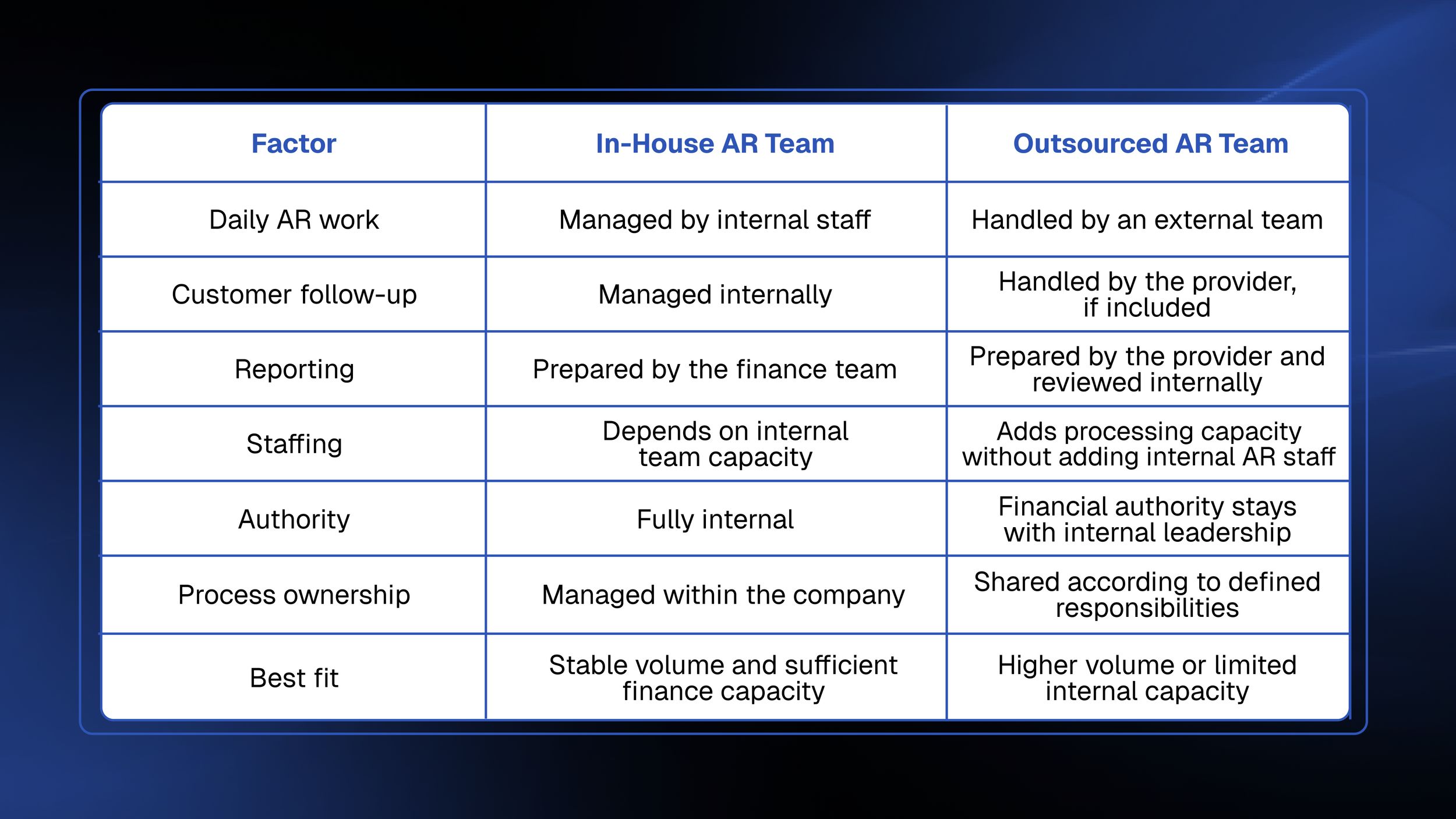
Before getting into the details of each model, here’s a quick comparison of how accounts receivable outsourcing services differ from an in-house setup:
What Are the Benefits of Accounts Receivable Outsourcing Services?
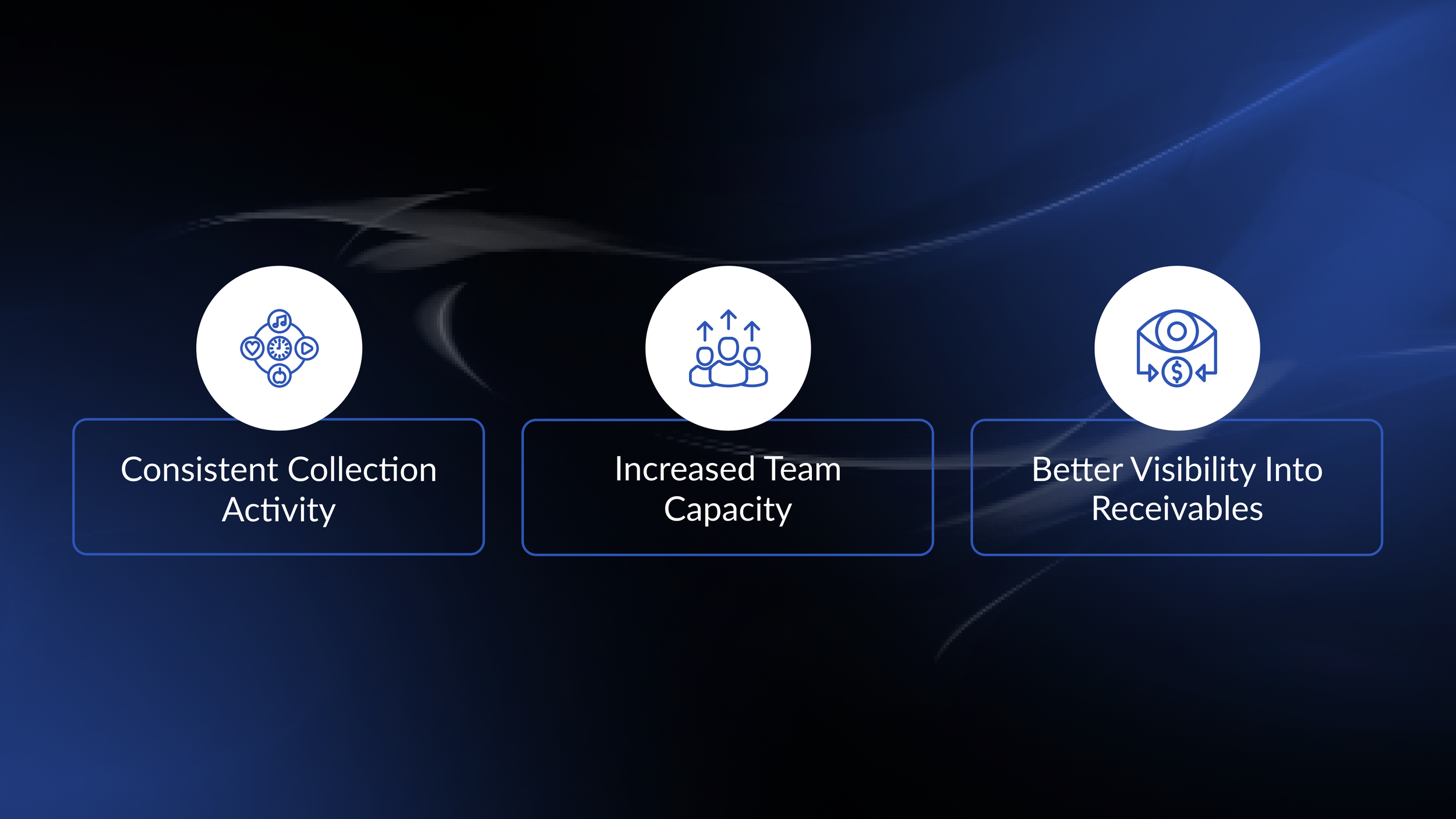
Outsourcing AR improves execution consistency while keeping financial decisions in-house. The benefits show up in collection activity, team capacity, receivables visibility, and process consistency:
Consistent Collection Activity: A dedicated team follows collection schedules and regularly reviews overdue balances. Clear ownership reduces follow-up gaps and gives past-due accounts a defined escalation path.
Increased Team Capacity: Routine receivables work takes time away from accounting responsibilities. Outsourcing gives controllers and accounting teams more time for reporting, reconciliations, close activities, and other higher-level work.
Better Visibility Into Receivables: Aging reports, collection updates, and outstanding-balance reports help identify overdue or unresolved balances earlier.
What Are the Risks of Outsourcing Accounts Receivable?
1116 Perspective | Controllers Shouldn’t Be Chasing Invoices
The benefit growing companies underestimate isn’t cost; it’s attention. When AP is handled well, your Controller spends less time chasing approvals and more time on the oversight that actually protects your financials- the same oversight 1116 brings into the accounting relationship, not as a separate add-on.
What Changes When AP Outgrows Its Current Setup
Outsourcing AR improves execution consistency while keeping financial decisions in-house. The benefits show up in collection activity, team capacity, receivables visibility, and process consistency:
Consistent Collection Activity: A dedicated team follows collection schedules and regularly reviews overdue balances. Clear ownership reduces follow-up gaps and gives past-due accounts a defined escalation path.
Increased Team Capacity: Routine receivables work takes time away from accounting responsibilities. Outsourcing gives controllers and accounting teams more time for reporting, reconciliations, close activities, and other higher-level work.
Better Visibility Into Receivables: Aging reports, collection updates, and outstanding-balance reports help identify overdue or unresolved balances earlier.
What Are the Risks of Outsourcing Accounts Receivable?
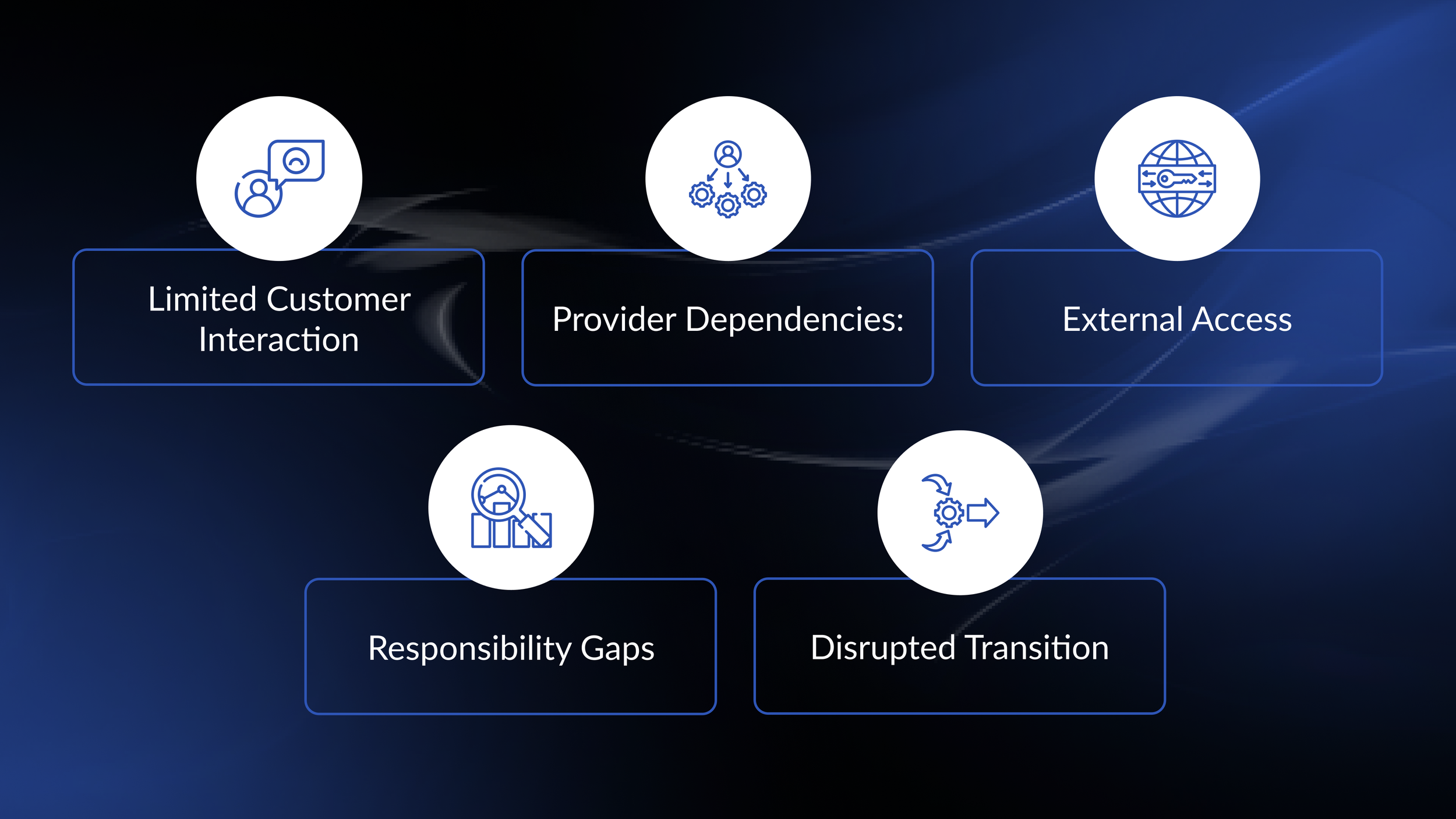
Outsourcing AR changes who handles recurring payment activities, creating risks around customer communication, provider reliance, data access, accountability, and process continuity.
Limited Customer Interaction: An external team may handle payment reminders, collection calls, and routine account inquiries, reducing internal involvement in customer payment conversations.
Provider Dependencies: The business relies on the provider for consistent processing, communication, reporting, and follow-up. Service interruptions or staffing issues can affect continuity.
External Access: Accounts receivable work involves customer records, payment information, accounting data, and system access. External access increases the number of people and systems handling financial information.
Responsibility Gaps: Tasks can be missed or delayed when the provider and internal team lack clear responsibilities for collections, disputes, approvals, reporting, and escalations.
Disrupted Transition: Moving receivables activities outside the company requires transferring customer records, open invoices, payment histories, and established procedures. Workflow differences can disrupt processing during the transition.
When Should You Consider Outsourcing Accounts Receivable?
Consider outsourcing when receivables require more time and attention than your finance team has available.
AR Takes More Finance-Team Time: Receivables work takes time away from reporting, close, and other accounting responsibilities.
Collection Follow-Up Becomes Inconsistent: Payment reminders and overdue-account follow-ups are no longer handled consistently.
Aging Balances Need Repeated Attention: Past-due accounts require frequent review and manual follow-up.
Invoice or Customer Volume Increases: Higher transaction or customer volume puts additional pressure on the existing team.
Reporting Lacks Sufficient Visibility: Your finance team lacks timely information on outstanding balances, aging, or collection activity.
1116 Perspective | Our Take
Invoice volume alone does not justify outsourcing AR. The decision becomes relevant when routine receivables work starts taking time away from close, reporting, analysis, and other accounting responsibilities.
How to Evaluate an Accounts Receivable Outsourcing Provider?
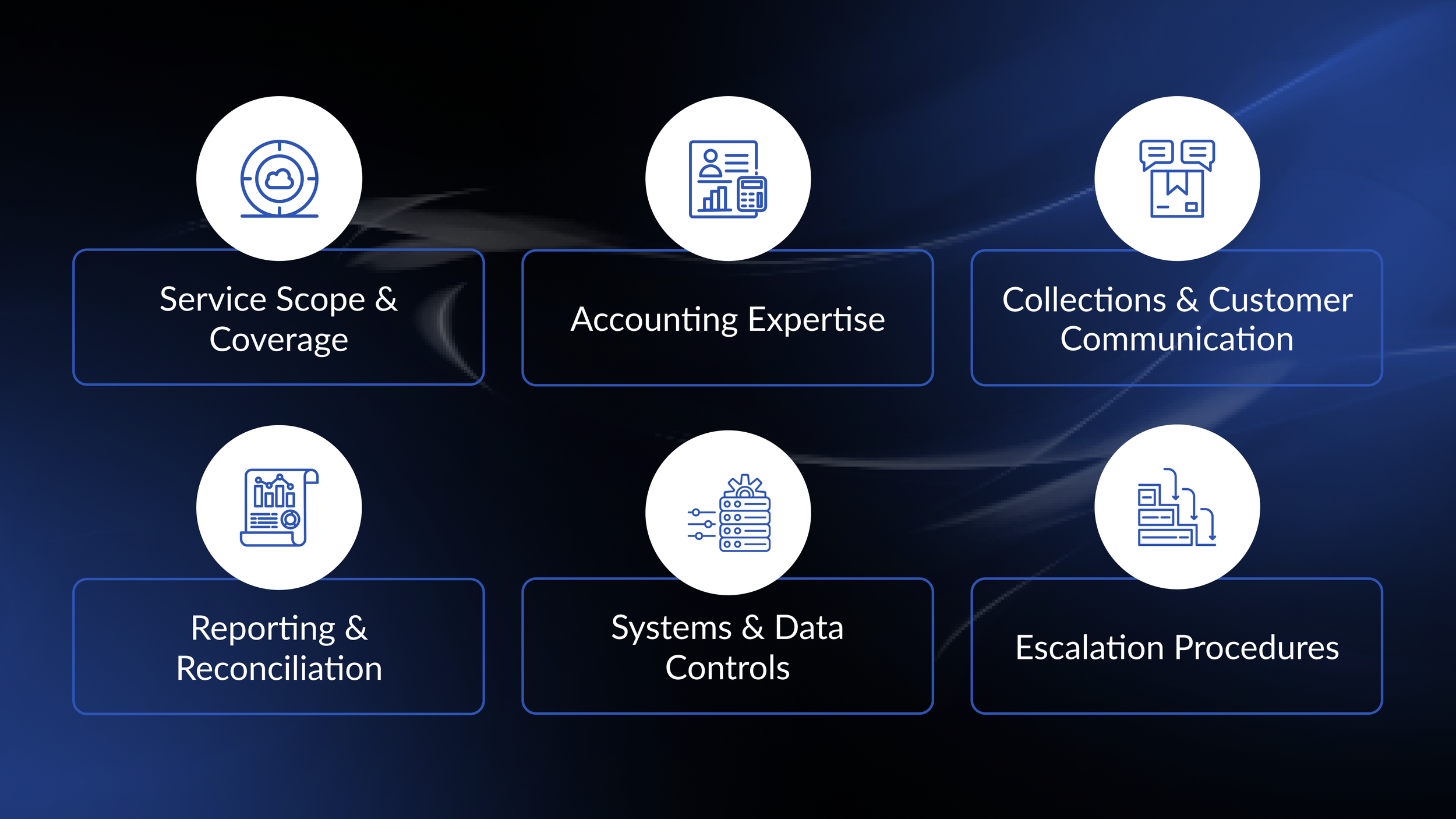
Evaluate an accounts receivable provider based on its service scope, accounting capabilities, processes, systems, and ability to work within your finance function:
Service Scope & Coverage: Confirm which receivables activities the provider handles and which remain with your internal team.
Accounting Expertise: Review experience with receivables, cash application, reconciliation, aging, and related accounting work.
Collections & Customer Communication: Understand how the provider manages payment follow-up, overdue accounts, customer inquiries, and escalations.
Reporting & Reconciliation: Review reporting frequency, aging detail, collection activity, reconciliations, unapplied cash, and discrepancy handling.
Systems & Data Controls: Confirm accounting system compatibility, access permissions, customer data handling, and security controls.
Escalation Procedures: Establish how the provider identifies and escalates disputes, unusual transactions, and issues requiring internal attention.
Review a sample receivables workflow before entering an agreement. A practical walkthrough often reveals more than a service description.
Gain Better Control Over Your Accounts Receivable With 1116 Partners

Receivables do more than track unpaid invoices. Collection activity, cash application, reconciliations, and aging reports all feed into the accuracy of your financial records and the visibility your finance team has into cash.
1116 Partners brings Controllers and Senior Accountants into the accounting function, supporting accounts receivable alongside reconciliations, general ledger management, Financial Reporting Services, cash flow reporting, and Month-End Close Services.
Your finance team gains additional accounting capacity without having to treat receivables as a standalone process.
For growing businesses, lean finance teams, and multi-entity companies, 1116 Partners provides the accounting support needed to manage receivables while keeping the overall finance function connected.
FAQs
-
The cost depends on the scope of services, transaction volume, number of customers, systems involved, and the level of accounting support required. A business handling only collections and payment follow-up will have a different cost structure than one that outsources invoicing, cash application, reconciliation, and reporting.
-
Yes. This kind of outsourcing can fit businesses that have outgrown informal receivables processes but do not need a larger internal AR team. The decision should rest on workload, finance-team capacity, customer volume, and the level of accounting involvement the business needs.
-
Yes. Outsourced receivable services can operate within an existing accounting or ERP environment when the provider has the required system capabilities and access. Before moving forward, confirm which systems the team will use, how data will move between systems, and which records your internal finance team will maintain.
-
Your internal finance leadership should retain authority over credit terms, customer-specific decisions, write-offs, and other judgments that affect the financial records. These services can handle the related administrative and collection activities, but financial decisions should follow the authority structure established by the business.
-
Yes. A business can outsource selected responsibilities while keeping other activities in-house. For example, an internal finance team can retain credit decisions, dispute resolution, and customer relationships while an external team handles invoicing, payment follow-up, cash application, or reconciliation. The division should match the responsibilities your finance team can manage internally.
