

When Should a Small Business Outsource Its Accounting Services?
It’s 11 PM on a Tuesday, and instead of working on the product launch you’ve been planning for weeks, you’re reconciling last month’s Stripe payouts against your bank statement because the numbers don’t match.
This isn’t the first time this month. It probably won’t be the last.
That’s usually the actual signal: not a revenue number, but a moment like this one. The right time to outsource accounting services for small business needs is once bookkeeping starts costing more in founder time, errors, or missed opportunities than it would cost to hand off.
There’s no universal revenue threshold; the right timing depends on how much your books are already costing you, not how big your business has gotten.
This blog walks through the specific signs it’s time to outsource, what it costs compared to the alternatives, and how to decide with confidence instead of guesswork.
Key Takeaways
- No fixed revenue number signals it’s time to outsource accounting services; the real trigger is founder time, error risk, or growing complexity.
- Common signs include falling behind on books, a real financial error surfacing, and outgrowing what a single local bookkeeper or DIY spreadsheet can handle.
- Outsourced accounting services differ from a full client accounting services engagement; this is a timing decision, not a decision about the full scope of what’s included.
- The cost comparison isn’t just hourly rate versus salary; hidden costs like founder time and error risk matter just as much.
- The right timing often looks different for an Ecommerce business than a SaaS company, since the complexity that triggers the need is different.
What Does It Mean to Outsource Your Accounting?
Outsourcing accounting services for small business owners means handing off some or all of your bookkeeping, reconciliations, and financial reporting to an external accounting team, rather than managing it yourself or hiring an in-house employee.
This is sometimes called outsourced accounting services, accounting outsourcing services, or small business outsourced accounting, depending on how the arrangement is scoped—the terms are generally used interchangeably, and outsourcing accounting services for small business owners tends to follow the same core pattern regardless of which term is used.
This blog focuses on when to make that switch. For a fuller breakdown of what an outsourced accounting relationship actually includes- bookkeeping, month-end close, controller oversight, and more.
See What Are Client Accounting Services?
6 Signs Your Business Has Outgrown Its Current Accounting Setup
Outsourcing rarely happens because you hit a specific revenue number. It usually gets triggered by one of these:
You’re spending founder hours on bookkeeping instead of the business: If you’re categorizing transactions or chasing down a discrepancy at 11 PM, that’s time you’re not spending on product, sales, or the actual work of running the business.
Your books are consistently behind, not just occasionally late: A late month here and there is normal. A close that’s perpetually two or three months behind means you’re making decisions without knowing your actual financial position.
An error has already surfaced: A missed payment, an incorrect number that made it into an investor update, or a tax filing issue- these are expensive signals that the current setup isn’t holding up.
You’ve outgrown a single local bookkeeper or a DIY spreadsheet: What worked at $200,000 in revenue often breaks down well before $2 million, especially once transaction volume climbs.
You’re facing external scrutiny, a fundraise, a loan application, or an audit: Investors and lenders expect financials that hold up under closer scrutiny, not a spreadsheet that only makes sense to you.
Your business model has added complexity a generalist can’t keep up with: A growing Ecommerce brand selling across Shopify, Amazon, and a wholesale channel needs someone who understands multi-channel reconciliation and sales tax nexus. A SaaS company billing through Stripe needs someone fluent in deferred revenue and MRR, not someone learning it on your books.
1116 Perspective | Act Before Accounting Becomes a Problem
The businesses that wait too long to outsource usually aren’t waiting for a specific number to hit. They’re waiting for the pain to become undeniable: a missed payment, a bad board meeting, a sleepless night before a filing deadline. Businesses that get ahead of it focus on time and errors, not just revenue.
How Much Does Outsourced Accounting Cost?
The real cost comparison isn’t just hourly rate versus salary; it includes hidden costs that don’t show up on an invoice.
| Accounting Approach | DIY / Founder-Managed | Local Part-Time Bookkeeper | Full-Time In-House Hire | Outsourced Accounting Services |
|---|---|---|---|---|
| Direct cost | “Free”, but not really | Low to moderate hourly rate | Salary + benefits + overhead | Recurring service fee |
| Founder time cost | High, hours per week | Low to moderate | Low, once hired | Low |
| Coverage during time off | None | Often none | None, unless backup exists | Typically built in |
| Error risk | High, especially without training | Moderate | Depends on experience level | Lower, with review processes in place |
| Access to specialized expertise | Limited to founder’s knowledge | Limited to one person’s experience | Limited to one person’s experience | Access to a team with varied specialties |
| Scalability | Breaks down as volume grows | Limited by individual capacity | Requires additional hires to scale | Scales with the engagement |
Accounting is consistently one of the functions small businesses most commonly outsource, alongside IT and payroll, and for most owners, the appeal isn’t complicated: it’s spending less time on something that isn’t the core business and more time on the work that actually grows it.
Addressing Common Outsourced Accounting Concerns
Outsourcing accounting can raise practical questions about visibility, security, and control. Here are some common concerns and what to consider before making the switch.
Concern 1: “I’ll lose visibility into my own finances.”
The opposite is usually true. A DIY spreadsheet or an overwhelmed local bookkeeper often means less real visibility, not more; you just don’t notice the gap until something goes wrong. A good outsourced provider gives you a clearer, more current picture through regular reporting, not a black box.
Concern 2: “Is my financial data secure with an outside provider?”
Security depends on the provider’s systems, not on whether the work happens locally. Look for encrypted, cloud-based platforms, defined access controls, and clear answers about how your data is handled- the same standard you’d expect from any provider handling sensitive information.
Concern 3: “Isn’t outsourcing accounting for bigger companies, not small businesses?”
Outsourced accounting scales down as easily as it scales up; many providers work specifically with small and growing businesses, not just larger ones. The complexity that triggers the need (multi-channel sales, subscription billing, investor reporting) shows up well before a business is “big.”
Concern 4: “Will a generalist actually understand my business model?”
Ask this directly before signing on. A provider without Ecommerce or SaaS experience may not understand multi-channel COGS or deferred revenue; confirm relevant experience before assuming any outsourced provider is the same as any other.
1116 Perspective | Control Doesn’t Guarantee Visibility
Control and visibility aren’t the same thing. Doing your own books gives you control, but it doesn’t automatically give you visibility; plenty of founders "control" books they don’t actually understand at a glance. The right outsourced relationship should increase your visibility, not just take the task off your plate.
How to Know You’re Choosing the Right Provider
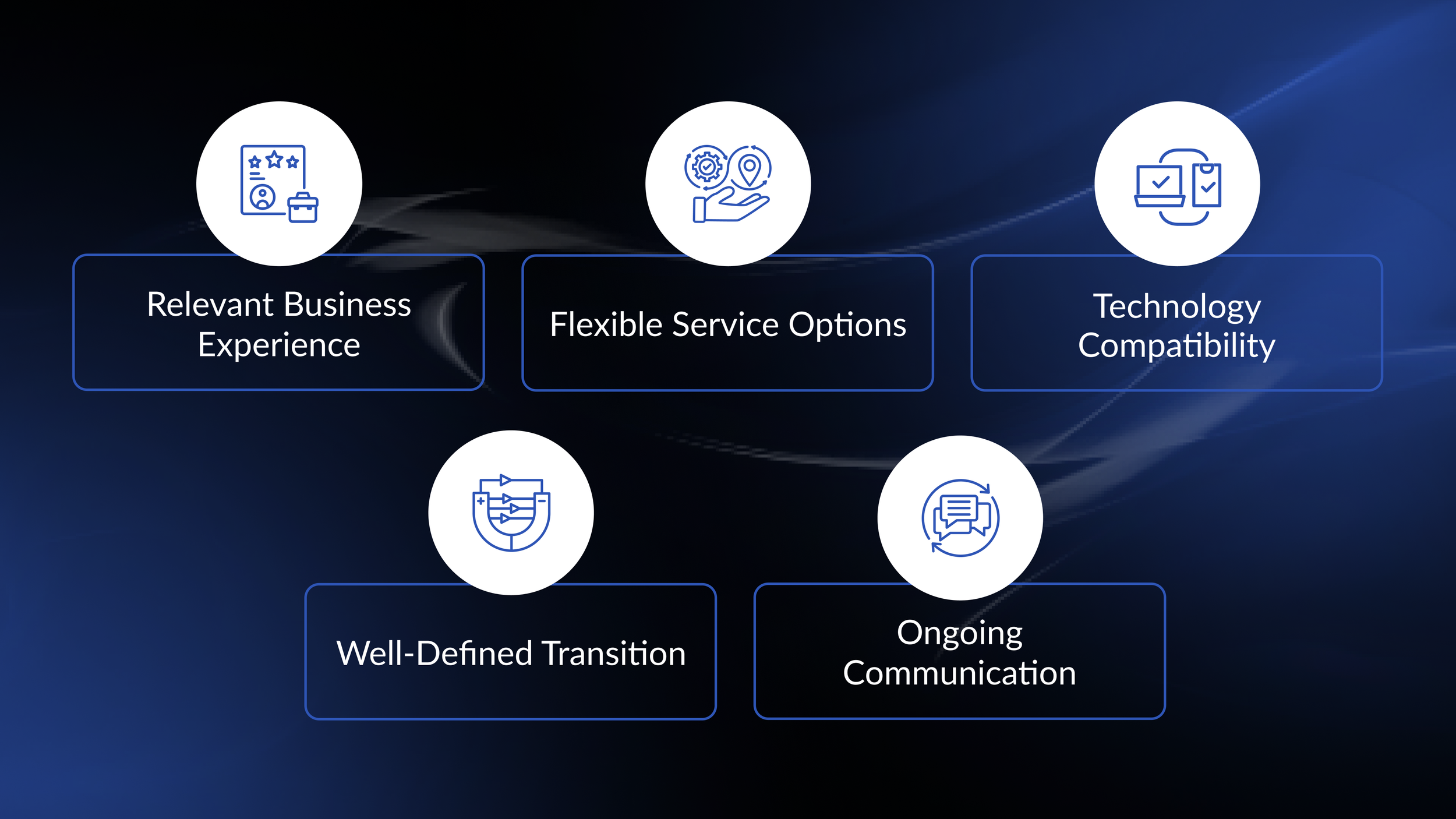
The provider you choose matters as much as the decision to outsource. The right fit should match your business size, current setup, and level of support you need. Before you sign on, look at:
Relevant Business Experience: A provider built for enterprise clients may not have the right processes or pricing for a small business moving away from DIY bookkeeping. Look for experience supporting businesses at your stage.
Flexible Service Options: You don’t have to hand off your entire accounting function at once. Start with specific needs, such as bookkeeping or reconciliations, and expand the scope as your needs change.
Technology Compatibility: If your books are in QuickBooks Online or Xero, confirm the provider can work within your existing system rather than requiring a platform change.
Well-Defined Transition: Understand how the provider will bring existing records up to date, transfer information, and take over ongoing work. A clear transition plan can make the switch much easier.
Ongoing Communication: Some providers rely mainly on dashboards and reports, while others offer regular check-ins and direct access to their team. Understand how communication will work before you commit.
For the full breakdown of what to evaluate in a provider, service scope, industry experience, technology, and communication practices, check out: What Are Client Accounting Services?, which covers this in depth.
Get the Accounting Support Your Business Needs With 1116 Partners
A scope that grows with you: 1116 Partners brings Controllers and Senior Accountants into the relationship as your needs grow, starting with Outsourced Accounting Services and SaaS Bookkeeping Services, and extending into Month-End Close Services, Fractional Controller Services, and CFO-level advisory as your business matures. You’re not locked into a single tier of support you’ll eventually outgrow.
Get Remote Accounting Built for Your SaaS Business With 1116 Partners

As your business grows, your accounting needs can grow with it. The right support can give you clearer financials, more consistent processes, and confidence in the numbers you use to make decisions.
1116 Partners provides Outsourced Accounting Services for growing Ecommerce and SaaS businesses. The team supports the day-to-day accounting work while helping businesses maintain reliable, up-to-date financial information as they grow.
FAQs
-
No fixed number. More useful signals include how much time bookkeeping takes, whether errors have already surfaced, and whether your business model has outgrown what a single local bookkeeper or spreadsheet can handle.
-
Not with a well-run engagement, regular reporting from an outsourced provider typically gives founders more real visibility than a DIY setup, not less.
-
Yes. Many small businesses start by outsourcing a specific function, like bookkeeping or reconciliations, while retaining other responsibilities internally, and expand the scope as needs grow.
-
A bookkeeper is typically one person with a fixed set of skills. Outsourced accounting services usually provide access to a team with varied expertise, bookkeeping, reconciliations, reporting, and often controller-level oversight, without the coverage gaps a single hire creates.
-
It varies by the complexity of your books and how organized your existing records are, but most transitions involve an initial review period followed by a phased handoff, rather than an overnight switch.
